
Emly Header

Production Scheduling for

Manufacturing

Manufacturing today is a complex dance. Balancing fluctuating demand, resource limitations, and unexpected disruptions can quickly turn your production schedule into a chaotic challenge, causing delayed deliveries, ineffective resource utilization, and cost overheads.

Need  expert advice on Production Scheduling?
Our AI specialists are here to help. Fill out the form below to schedule a call and get personalized guidance on how to leverage AI for your specific needs.

[wpforms id="18678"]

Challenge

Missed deadlines can severely undermine customer trust, leading to strained relationships and potential loss of business, as clients seek more reliable partners. Inefficient scheduling exacerbates this issue, driving up operational costs through wasted resources and unnecessary overtime, which in turn inflates production expenses. Moreover, poor production planning can result in inventory pile-up, where overproduction ties up critical capital and incurs additional storage costs, ultimately impacting the company’s financial health and operational efficiency.

Solution

AI-powered production scheduling in manufacturing optimizes resource utilization and enhances operational efficiency by analyzing IoT data, machine learning models, and historical production data. These systems dynamically adjust schedules based on real-time insights, ensuring minimal downtime and maximum productivity. By predicting potential bottlenecks and optimizing resource allocation, AI enables proactive adjustments to production sequences, enhancing flexibility and responsiveness to changing demands. This approach increases throughput, reduces lead times, and improves decision-making through data-driven insights, ultimately strengthening competitiveness and customer satisfaction in the market.

Insights That Matter
magnify-icon
Predict and Mitigate Production Bottlenecks Before They Cause Delays.
magnify-icon
Optimize Resource Allocation for Maximum Efficiency and Minimal Waste.
magnify-icon
Create Adaptive Schedules That Respond to Real-Time Demand and Supply Changes.

Benefits

By implementing AI-powered scheduling, you can transform your production floor from a chaotic scramble into a well-oiled machine, giving you a clear advantage in today’s competitive landscape.

Direct Benefits
Indirect Benefits

Good Practices to Schedule Production

Build Right Team

Creating an efficient production scheduling solution demands a well-rounded team with diverse expertise. Building the right team guarantees precision in execution and alignment with business goals. Here are two crucial roles essential for success,

  • Operations Specialists who possess extensive knowledge of manufacturing processes, logistics, and supply chain dynamics.
  • Data Science experts skilled in data-driven decision-making and adept at developing predictive models for enhanced scheduling and productivity.


Recommendation: Build your own AI capability
Upskill your existing workforce. Modern, user-friendly AI technologies enable non-technical individuals to develop AI solutions. To ensure successful implementation, hands-on AI training should be provided to all team members, from business teams to supply chain experts. This approach not only leverages current talent but also delivers direct value by bring in valuable business insights to build better demand forecasting solution. 

Identify Right Data

Acquiring precise data is critical for constructing a dependable AI-driven production scheduling system. By integrating internal and external data sources, you gain a comprehensive insight into factors influencing scheduling efficiency. Here are key suggestions,

Internal Data 
  • Production Capacity Data
  • Order Data
  • Demand Forecasts
  • Inventory Data
  • Machine Availability Data
  • Workforce Data
  • Production Cost Data
External Data
  • Supplier Lead Time Data
  • Environmental Data

You can use our Emly Labs Data Scout GPT for identifying data for training your AI models, with clear, actionable advice.

Define Objectives

Establishing clear objectives and goals is essential for effective production scheduling in manufacturing. By aligning these with overall business strategy and defining measurable targets, manufacturers can improve scheduling accuracy and operational efficiency.

  • Align with business strategy to support overall growth and efficiency.
  • Set specific and measurable goals using SMART criteria.
  • Determine key performance indicators (KPIs) like forecast accuracy and inventory turnover.
  • Establish short-term, medium-term, and long-term forecasting periods.
  • Compare new forecasting methods with existing ones to gauge improvement.
  • Define ROI goals to evaluate the financial benefits of improved forecasting.

Choose the Right Tools

Right tools can significantly improve chances of successful implementation. They facilitate collaboration, rapid experimentation and provide clear, understandable insights. 

  1. Don’t reinvent the wheel; leverage existing, proven AI tools that save time and effort.
  2. Accessibility: Choose tools that are user-friendly and can be used by the entire team.
  3. Clarity: Opt for tools that are easy to understand for users of all skill levels.
  4. Collaboration: Select tools that support teamwork across different departments.
  5. Cost-Effectiveness: Implement tools that are affordable and offer good value.
  6. Experimentation: Use tools that allow for rapid testing and iteration of models.
  7. Explainability: Choose tools that provide clear explanations for forecasts to build trust and understanding among users.

Adopt Industry Best Practices with Emly Labs

Explore how Emly Labs empowers your team to implement optimal production scheduling techniques. Our platform integrates industry-leading practices to streamline manufacturing operations, enhance productivity, encourage teamwork, ensure data precision, and generate actionable insights.

Manage Your AI Projects End-to-End
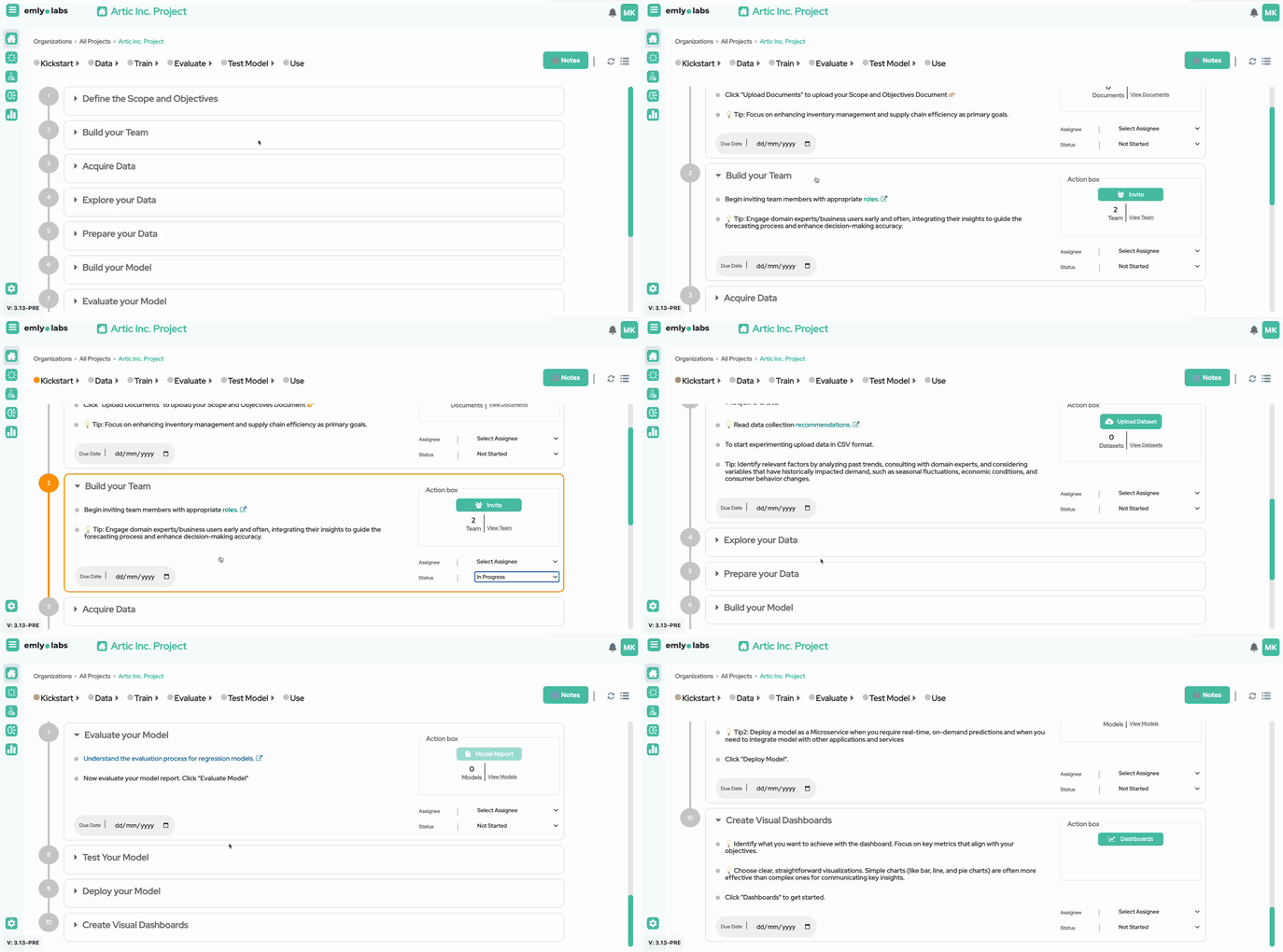
Explore, Prepare and Maintain Data Easily
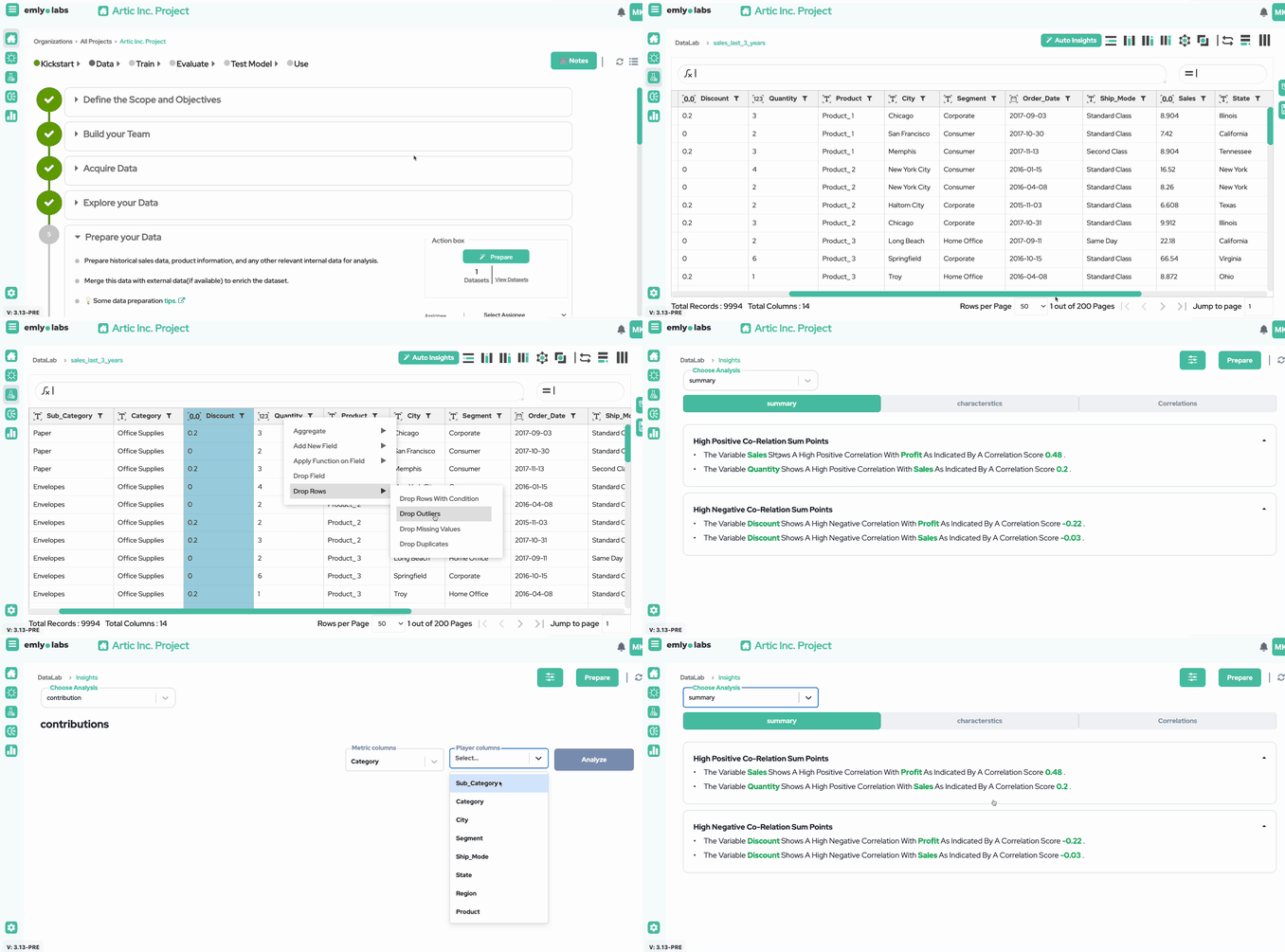
Model Management: Experiment, Build and Maintain.
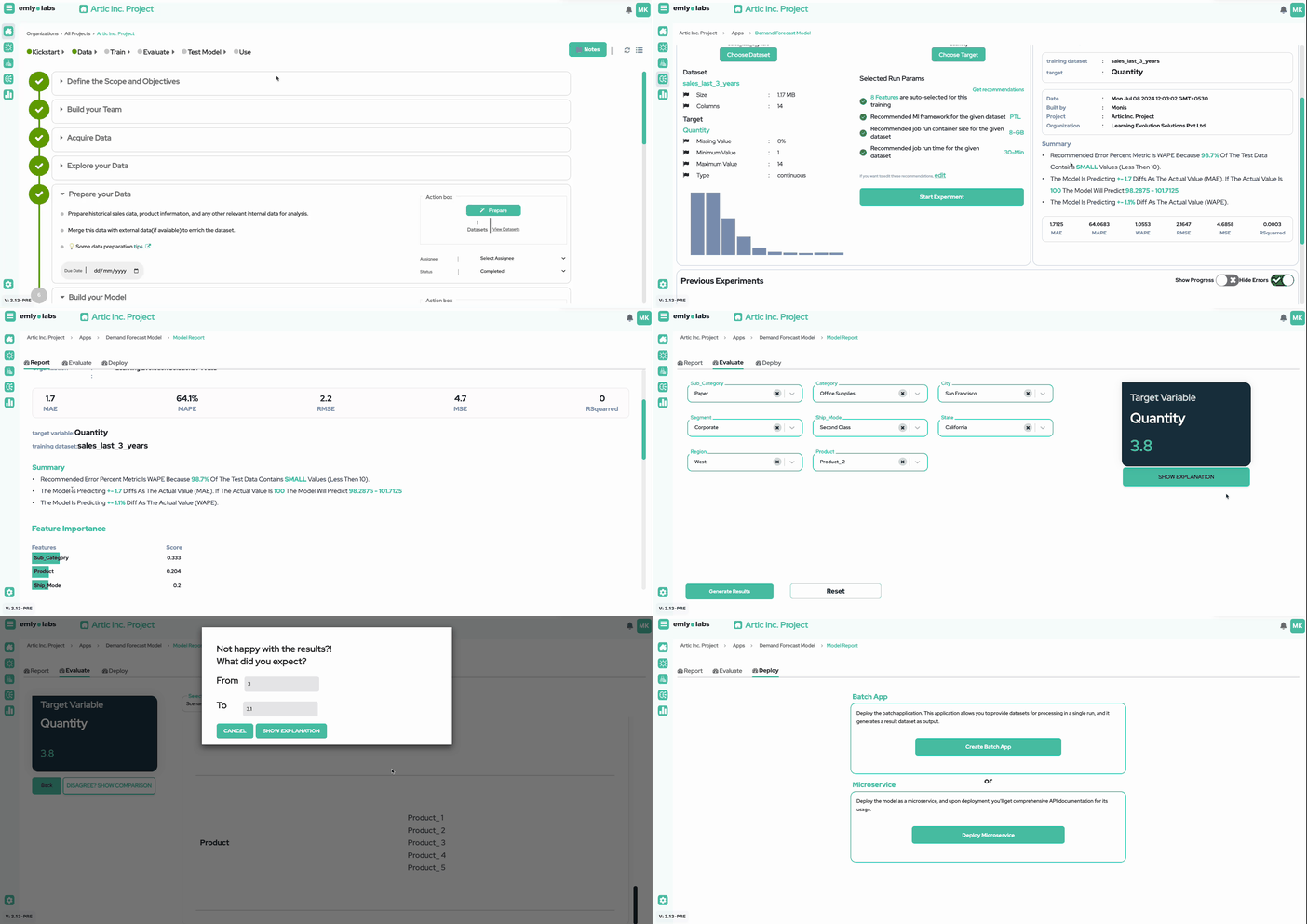
Transform Data into Stunning Vizual Stories

And the best part? You can achieve all this without writing a single line of code.

Explore Other

Case Studies

Metallurgical plants polluting air with toxic smoke from pipes, ecological disaster in Zaporizhzhia, Ukraine

Energy Management

Meeting energy efficiency targets requires more than just optimizing consumption patterns. Considerations around energy procurement, regulatory compliance, and sustainability initiatives are equally crucial. For instance, integrating AI to manage dynamic pricing and energy storage solutions can be beneficial in balancing demand and supply while ensuring cost-effectiveness and reliability.

Smart industry robot arms for digital factory production technology showing automation manufacturing process of the Industry 4.0 or 4th industrial revolution and IOT software to control operation .

Predictive Maintenance

Predictive maintenance uses data analytics and real-time monitoring to forecast equipment failures. By proactively scheduling maintenance, businesses can prevent unexpected breakdowns, reduce costs, and improve overall productivity. This approach minimizes downtime, extends equipment lifespan, and optimizes production efficiency.

Start Now!

Begin Your Journey of AI-Augmented Decision Making with Emly’s Predictive AI

Image (17)